
By: Jennifer Jeffcoat
Jennifer writes for Brindley Beach Vacations and Sales, sharing vacation planning tips, travel insights, and property highlights to help guests make the most of their time in the Outer Banks and Hatteras Island, NC.
One of the most popular pastimes on the Outer Banks, or any beach for that matter, is hunting for treasures in the sand. You can go beachcombing for unique shells, sea glass, shark teeth, and more! From the 4x4 beaches of Corolla all the way to Ocracoke Island and the tip of the Cape Hatteras National Seashore, you’ll find plenty of shoreline to explore.
If you’re planning an upcoming visit to the OBX, this guide to beachcombing will help you decide where to go, figure out what you may find, and help you prepare to make the most of your day by the water. Check it out and get ready for a wonderful OBX getaway.
In This Article:
- What is Beachcombing?
- What Kinds of Shells Can I Find on the Outer Banks?
- When is the Best Time to Go Beachcombing?
- Where is the Best Outer Banks Beachcombing?
- Can I Keep Everything I Find While Beachcombing on the Outer Banks?
- Do I Need Any Specific Gear to Go Beachcombing?
- What Else Can I See While Beachcombing?
- Where to Stay for Easy Beach Access
- Frequently Asked Questions
What is Beachcombing?
Beachcombing, as the name implies, is the simple act of combing through the sand to see what you can find. People of all ages enjoy this popular activity, often hunting for specific shells, elusive pieces of sea glass, fossils, whelk egg cases, and more. You can walk the beach and see what the waves uncover, or bring sifters, nets, and shovels to help you dig deeper.
What Kinds of Shells Can I Find on the Outer Banks?
There are many different shell varieties that wash up along the OBX shores. From rare scotch bonnets to popular coquina clams, seeing how many different types you can find is half the fun of beachcombing. Here are some to look out for:
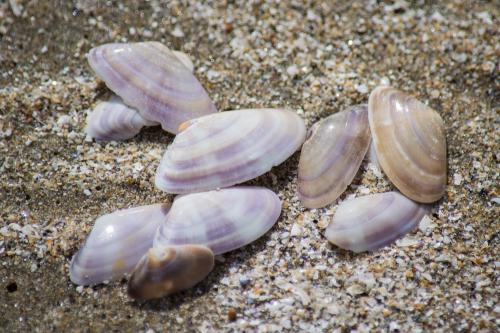
Coquina Clams
Coquina shells are small, delicate, and often brightly colored. Most measure less than an inch and can be white, yellow, orange, pink, purple, or striped. When both halves are connected, they resemble tiny butterfly wings.
These are some of the most plentiful shells on the OBX, regardless of which beach you visit. As the waves roll out, you’ll often find live ones burrowing into the wet sand—leave those alone and only collect empty shells.
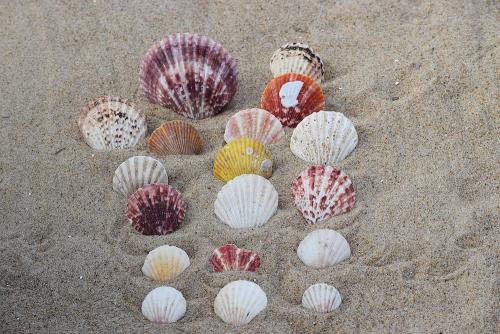
Calico Scallops
The familiar, fan-shaped shells of Calico Scallops are another variety found in large quantities on the Outer Banks. They feature raised ribs that extend from the base of the shell to the outer edge, across the entire surface. You’ll find them in mottled reds, pinks, oranges, browns, and cream colors.

Whelks
Not to be confused with conchs, whelks are smaller, spiral-shelled mollusks that come in three varieties that are relatively common here: knobbed, channeled, and lightning.
- Knobbed Whelks: Can be up to a foot long, feature a right-side opening, and colors range from cream and yellow to orange with purple streaks.
- Channeled Whelks: Often grey or tan, these can be anywhere from a few inches to over a foot long, though most are around 5 – 8 inches. They feature a pear-shaped body with a straight canal and deep channeled spirals
- Lightning Whelks: These feature a left-side opening and are often the largest of the three types, capable of growing 16 inches long. They have a large whorl and short spire and are often tan with brown “lightning” strikes down the body.
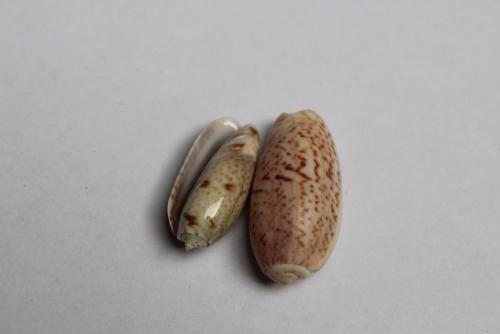
Olive Shells
Smooth, glossy, and cylindrical, with a short, pointed spire at the tip, these cream- or gray-colored shells are covered with brown/olive-green zigzags resembling tiny letters or markings
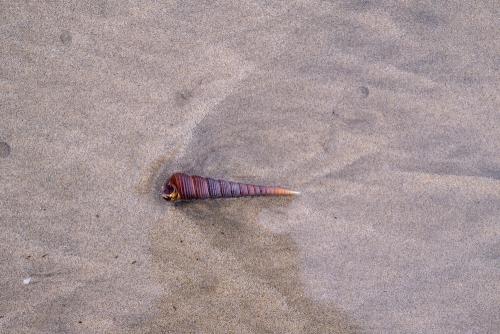
Auger
Auger shells are long, narrow, and sharply pointed, resembling drill bits or tiny unicorn horns. Their tightly wound spirals may be marked with brown, gray, cream, or subtle bands. Most examples found in North Carolina are only an inch or two long.
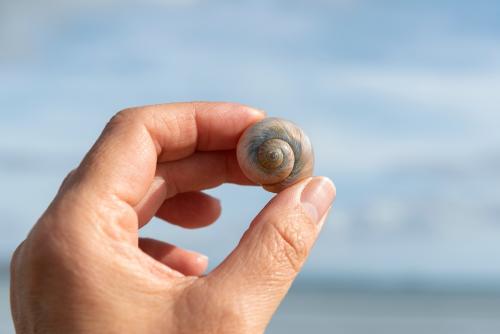
Moon Snail
Also known as shark eyes, Atlantic moon snail shells are round and smooth, shaped somewhat like a flattened globe. They’re typically tan or blue-gray and have a dark spiral near the opening that contributes to the “eye” nickname.
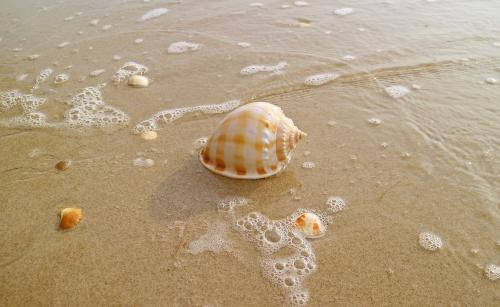
Scotch Bonnets
Despite being the North Carolina state shell, these are a pretty rare find. If you’re lucky enough to come across a fully intact Scotch Bonnet, you’ve won the beachcombing lottery! They’re round, helmet-shaped shells that often feature orange, brown, or tan markings that can look a bit like plaid.
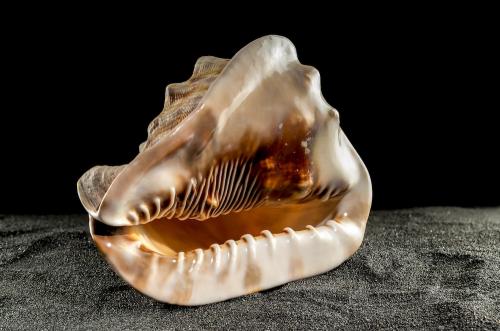
Helmet Shells
These large, domed snail shells can range from 2 inches to 16 inches long. They have a large opening with a thick outer lip that’s often lined with ridges or “teeth.” Colors are often neutral with spots of orange or dark brown.
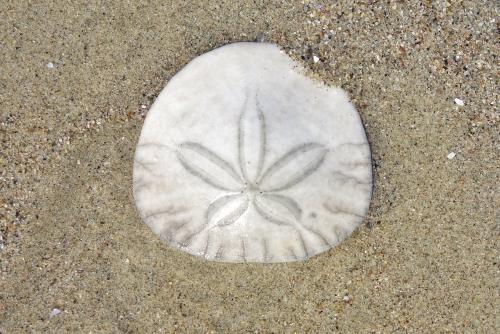
Sand Dollars
Perhaps one of the most recognizable beachcombing finds, sand dollars—at least fully intact ones—are pretty rare. Round and with a five-petaled pattern across the top, if you do come across one, make sure to only take it if it’s solid white. Live sand dollars are brown and should be returned to the water.
When is the Best Time to Go Beachcombing?
Conditions have a bigger impact on your potential finds than which beach you visit.
Winter is great because storms and nor’easters churn up the water, often delivering fresh deposits of shells and other treasures, making it a great season for beachcombing. An hour before low tide peaks is also a great time to scour the shore. As the water recedes, more and more shells will be unearthed. Additionally, folks who want the best odds should head out early in the morning before other shell hunters scoop up the best finds.
Where is the Best Outer Banks Beachcombing?
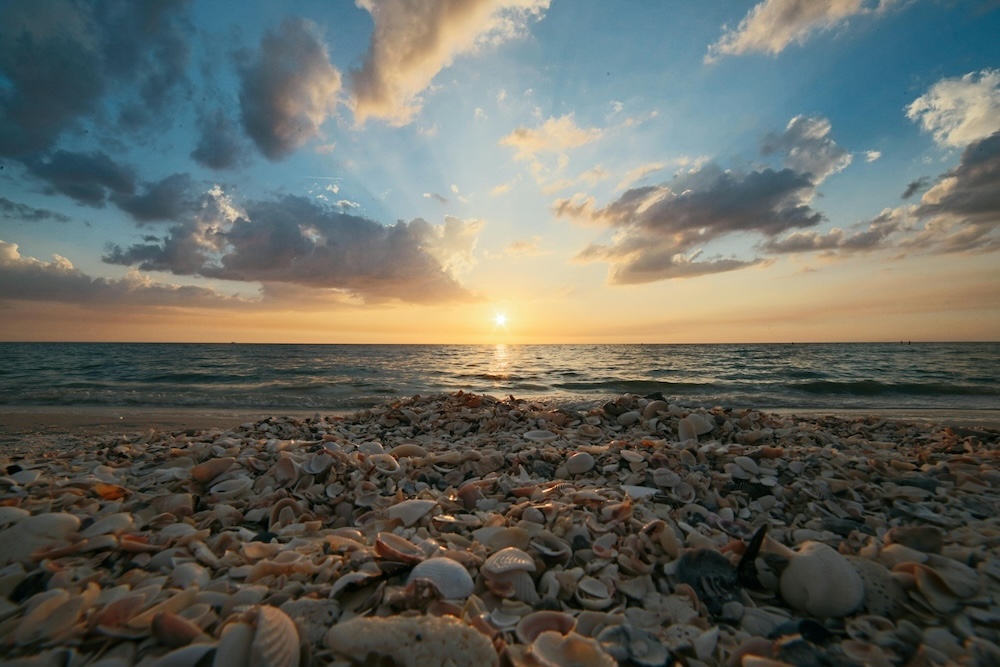
Coquina Beach
Located about 8 miles south of Nags Head, directly across from the Bodie Island Lighthouse access road, this is a popular beach for the namesake shell: Coquina clams. The beach features several free, paved parking lots, boardwalks, and a bathhouse with toilets and showers.
Ocracoke Island
Heralded as one of the best shelling spots on the Outer Banks, Ocracoke Island is easily accessible via passenger or vehicle ferry. Once you arrive, head to South Point at the southern tip for a chance at finding sand dollars, whelks, and other rarer shells. There’s a dedicated 3-mile path to South Point, or you can drive if you’ve got 4-wheel drive.
Carova Beach
This is the northernmost stretch of Corolla, accessible only by 4x4. Because of the remote location and need for a specific vehicle, the beach sees dramatically less foot traffic, meaning more shells for you! It’s a popular spot for finding channeled whelks. You may also glimpse the wild horses roaming nearby.
To access, follow Highway 12 until it ends in northern Corolla. The main entry is at the historic guard station, where the road transitions into the Currituck 4x4 beach access ramp.
South Beach in Buxton
Two currents converge here, creating a hook that collects larger, warmer-water shells like helmet conchs, olives, and sometimes even the rare scotch bonnet. Located just south of Cape Point, it’s a popular spot along the Cape Hatteras National Seashore and is easily accessible via walking paths (Ramp 45) or Ramp 43 or 44 if you’ve got a 4x4 car.
Can I Keep Everything I Find While Beachcombing?
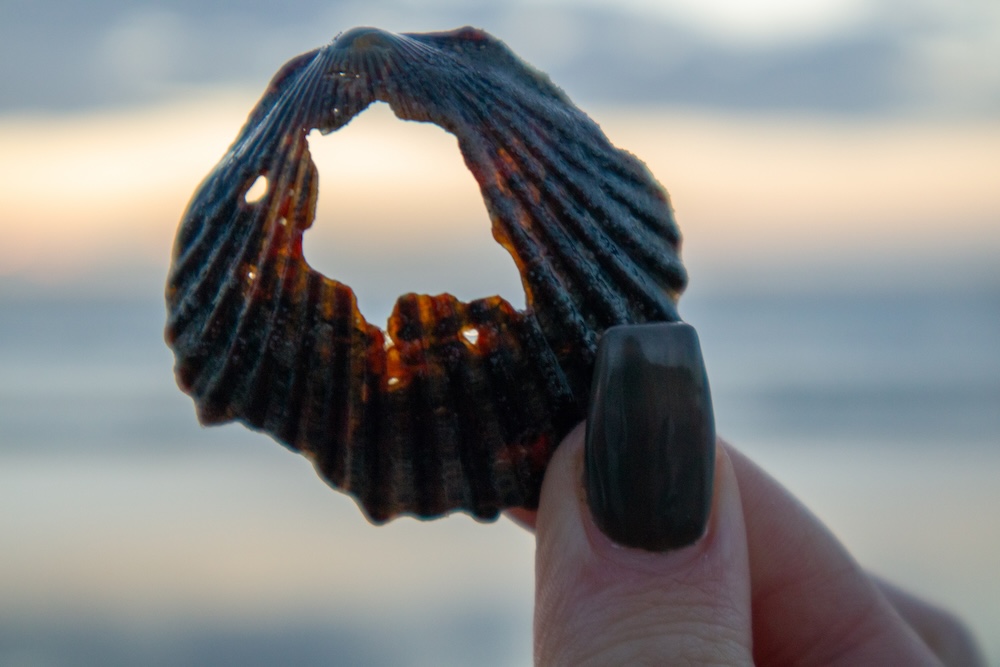
No. There are specific rules surrounding what you can and cannot take from the beaches of the Outer Banks.
Within Cape Hatteras National Seashore, each person may collect up to one five-gallon bucket of unoccupied seashells per day for personal, noncommercial use. Check every shell carefully and return any occupied shells to where you found them. Live sand dollars are also off-limits.
You can keep sea glass and other human-made objects that are not historically significant, but natural and cultural resources—including plants, coral, bones, feathers, sea turtle remains, fossils, shipwreck material, and Indigenous or historic artifacts—should remain where they are.
Rules can vary by location, so pay attention to posted closures and check before collecting in wildlife refuges or other protected areas.
Do I Need Any Specific Gear to Go Beachcombing?
Beachcombing isn’t complicated. You don’t technically need any gear at all.
If you want to sift through the sand or scoop up things a little farther out in the water, having a net or sieve, and a shovel to dig up hard-packed sand is helpful. Other than that, most beachcombing happens with your eyes or by brushing through the sand with your hands or feet.
What Else Can I See While Beachcombing?
Beyond shells, you should keep your eyes peeled for rarer items like sea glass, shark teeth, whelk egg cases, mermaid’s purses (skate eggs), fossils, and fulgurite (sand that’s been struck by lightning).
Where to Stay for Easy Beach Access
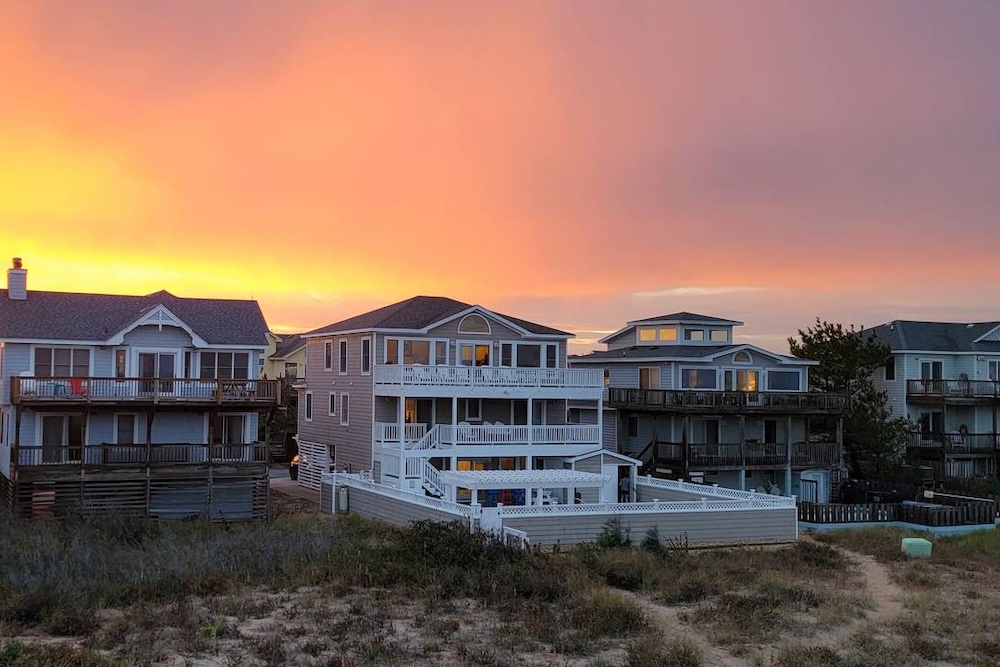
Featured Property: OS7Q, Du'ne Nothin'
Staying in an oceanfront vacation rental guarantees unbeatable proximity to excellent beachcombing. Simply wake up and walk directly onto the shore! This makes early-morning shell hunts or low-tide perusing easy. At Brindley Beach, we’ve got a wonderful inventory of oceanfront properties for every family.
Choose from large homes where cousins and grandparents can all stay under one roof, or beach cottages perfect for smaller families or groups. Bringing Fido along? No problem. Our pet-friendly vacation rentals let everyone enjoy the beach getaway. Plus, when you book directly with Brindley, you get access to incredible perks such as free beach photo sessions, beach gear credits, and the lowest rates compared to third-party travel sites.
Check out our available vacation rentals, review the description for included perks, and book your stay directly with us today! We can’t wait to see all the incredible beachcombing finds you come across.
See All OBX Vacation Properties
Frequently Asked Questions
Is beachcombing legal in the Outer Banks?
It is! There are limits and restrictions on what and how much material you can take, though. Unoccupied shells are fair game, while shipwreck debris, fossils, Indigenous artifacts, or live marine life are off limits.
Rules vary depending on who oversees the land: The National Parks Service, the N.C. Division of Parks and Recreation, or individual municipalities. Note, metal detecting is not allowed in any national or North Carolina state park. Read more about specific allowances at The News&Observer.
What is the best tide for beachcombing?
Low tide is best for beachcombing, as more shoreline is visible. Head out an hour before low tide peaks for the best experience.
Is beachcombing better after a storm?
Yes. Storms churn up the water and create bigger waves that wash up more shells on the beach. The downside is that the churning water often breaks shells, sand dollars, and other more prized finds.
Can you collect shells at Cape Hatteras National Seashore?
Yes, but there is a daily limit of five gallons per person per day. Take only shells or driftwood – items like bones, shipwreck pieces, or possible Indigenous artifacts are protected by law.
Can you keep a live shell you find on the beach?
No. If a shell is occupied by a living animal, return it to where you found it, or place it back in the water.